Case Study 3: The "Golden Sample" Trap – Exposing Material Substitution and Quality Fade
The Illusion:
A European marine equipment distributor placed a $400,000 re-order for heavy-duty pipeline valves. The relationship seemed perfect: the supplier in Ningbo had delivered a flawless first batch six months prior. The "Golden Samples" provided for this second batch were sent to the buyer's HQ and successfully passed all rigorous metallurgical salt-spray tests.
The supplier’s digital portal showed standard production progress, and the account manager assured the buyer that "everything is exactly the same as the last order." Confident, the buyer was prepared to wire the final 70% balance upon seeing the standard packing photos.
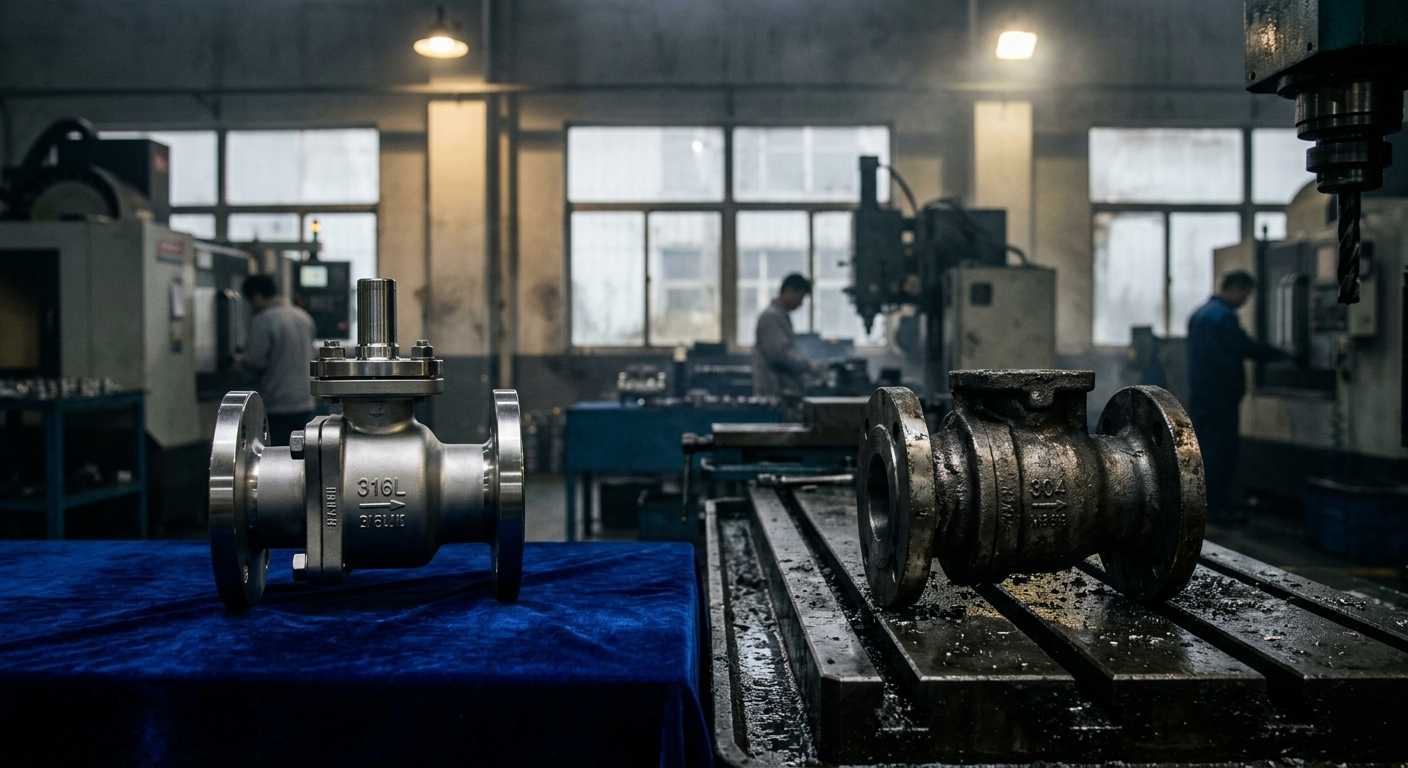
Visual Evidence 1: The stark contrast between the provided "Golden Sample" (left) and the actual, inferior components sitting on the active production line (right).
The Reality Check (Auditor's Perspective):
Complacency is the enemy of capital protection. The buyer hired us to conduct an unannounced Pre-Shipment Inspection (PSI), but we expanded the scope to a deep-tier Bill of Materials (BOM) verification.
It was early December in Ningbo. The coastal winter wind was biting, carrying a damp chill as we unexpectedly walked onto the factory floor. The factory manager tried to steer us into a brightly lit, heated QA room where three pristine, polished valves were waiting on a velvet cloth.
I ignored the QA room. In Zero-Trust verification, you never inspect the samples the factory wants you to see. I walked straight past the management team and onto the noisy, oil-stained shop floor, heading directly to the raw material staging area next to the CNC machines.
The Hidden Risk & Forensic Verification:
The valves were contracted to be forged from Marine-Grade 316L Stainless Steel—a critical requirement for preventing corrosion in saltwater environments.
Instead of relying on the factory's printed material certificates (which are easily forged), we brought our own handheld XRF (X-ray Fluorescence) Spectrometer. I pulled a heavy, unpolished valve body straight from the active production line and scanned it.
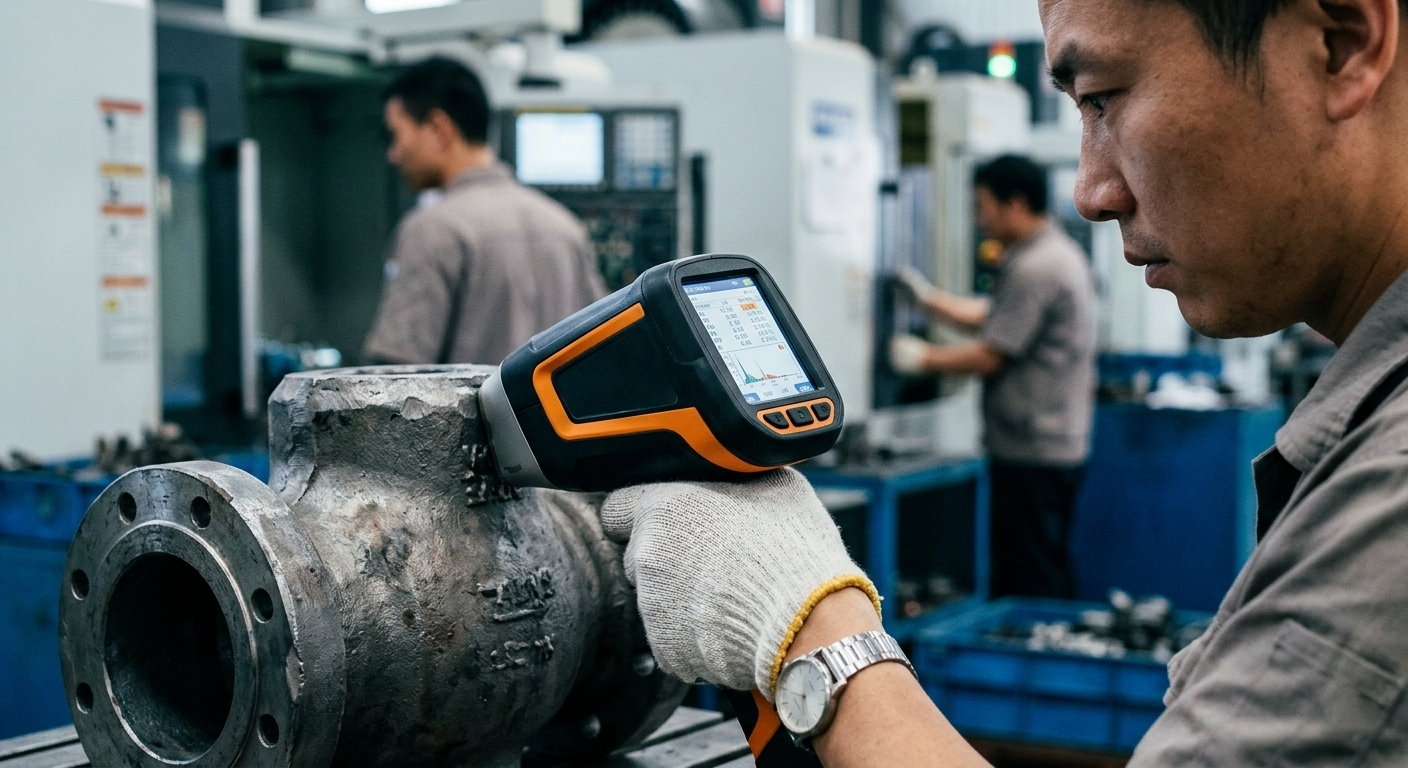
Visual Evidence 2: Conducting on-site forensic metallurgy using a handheld XRF Spectrometer to expose the fraudulent material substitution.
The screen beeped and delivered the hard truth: The molybdenum content was missing. They were using standard 304 Stainless Steel.
This was not a mistake; it was a calculated "Quality Fade." By substituting 316L with cheaper 304 steel, the factory was secretly pocketing an extra 15% margin on the $400,000 order. To the naked eye, these substituted valves looked identical to the Golden Sample. But in a highly corrosive marine environment, these valves would rust and fail within months, exposing the European buyer to millions in liability claims.
The Outcome: Enforcing the Ground Reality
The factory owner's excuses about "supply chain shortages" were immediately shut down by our forensic data. We intercepted the shipment three days before it was scheduled to be loaded onto the container.
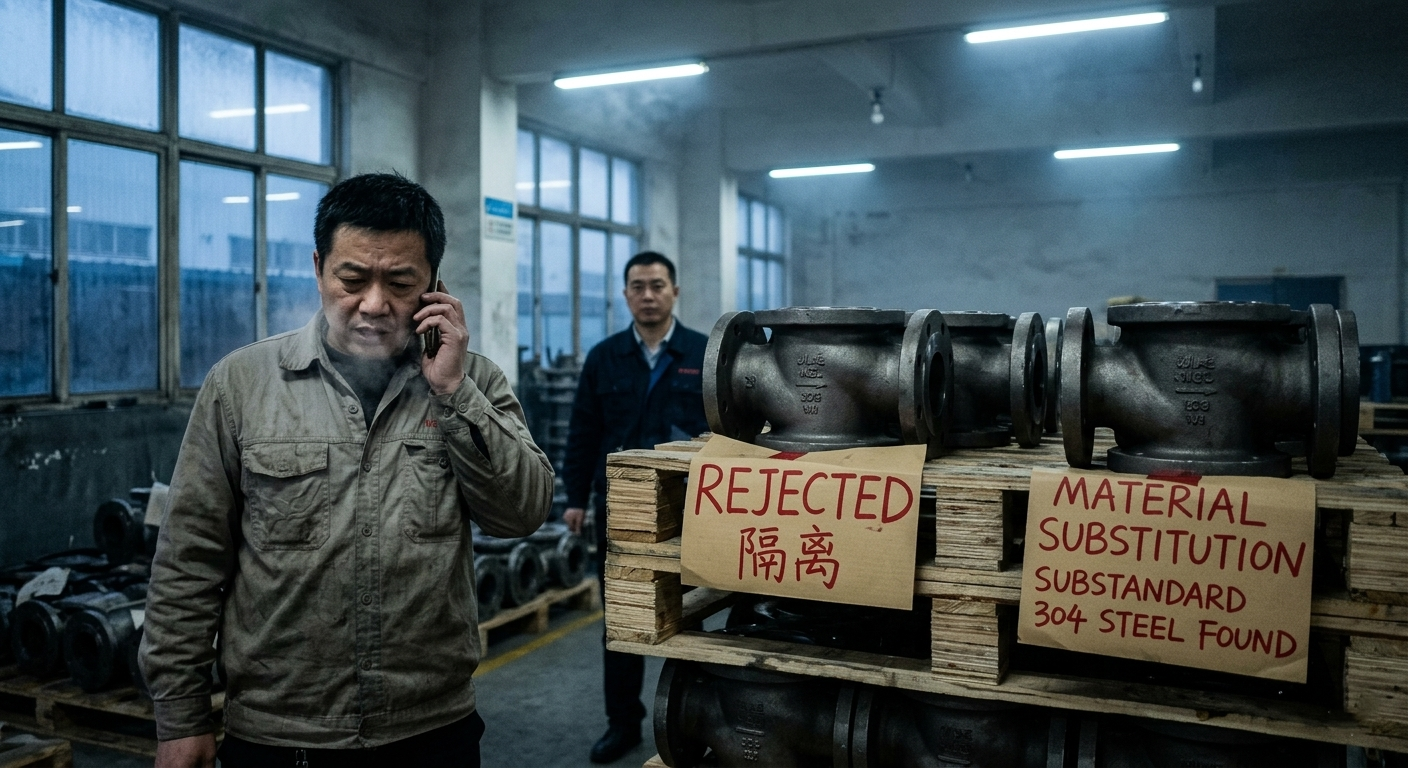
Visual Evidence 3: Intercepting the shipment and enforcing a strict quarantine of the sub-standard materials before they could leave the facility.
Armed with our real-time XRF scan reports and geo-tagged factory floor evidence, the Overseas Buyer possessed absolute leverage. The final 70% payment was frozen. We forced the supplier to quarantine the entire batch of 304 steel valves and re-manufacture the order using verified 316L ingots, with our Resident Auditor supervising the raw material melting process.
By penetrating the "Golden Sample" trap, we didn't just save a $400,000 order—we protected the Overseas Buyer from a catastrophic legal liability and enforced true metallurgical transparency.